Insect sting allergy
Definition
Many children experience insect stings every year. For most of them, these stings only cause mild pain and discomfort lasting for just a period of hours. Symptoms might include swelling, itching , and redness at the sting site. However, some children are allergic to insect stings. When they are stung by an insect to which they are allergic, their bodies produce an antibody called immunoglobulin E (IgE), which reacts with the insect venom and triggers the release of various chemicals, including histamine, that cause the allergic reaction. Stings may be life threatening for a small number of children. These severe allergic reactions may develop quickly and can involve several body organs. This type of reaction is called anaphylaxis and can be fatal.
Description
The majority of insect stings in the United States are from wasps, hornets, bees, yellow jackets, and fire ants. The class of insects capable of injecting venom into a person is called Hymenoptera. With the exception of fire ants, all of these insects are found throughout the United States. Fire ants are found primarily in the southeastern region of the country but have also been noted in some western states.
Insect venom is made up of proteins and other substances that usually only cause itching, pain, and swelling in those who are stung. This local reaction is usually confined to the site of the sting. Sometimes the redness and swelling may extend from the sting site and cover a larger area of the body. These large, local, non-allergic reactions can persist for days. Occasionally the site may become infected, requiring antibiotic treatment. Although most local reactions are not serious, if they are near the face or neck, swelling can block the airway and cause serious problems.
Some children may have a venom allergy, and more serious reactions can result if they are stung. It is important to note that allergic reactions to stings normally do not occur after the initial sting. A reaction may take place after two or more stings that have happened over an extended period of time. Therefore, it is essential to be aware of the possibility for allergic symptoms in children, even if they have been stung previously and had no reaction.
Demographics
It is estimated that over 2 million Americans are allergic to stinging insects. Up to one million hospital emergency room visits occur annually because of insect stings. Between 50 and 150 Americans die each year as a result of insect sting-induced anaphylaxis. It is possible that this number may be markedly underestimated. Bee, wasp, and insect stings cause more deaths in the United States than any other kind of injection of venom. Most deaths occur in people 35 to 45 years of age. About one out of 100 children has a systemic allergic reaction from the sting of an insect. Fifty percent of deaths occur within 30 minutes of the sting.
Causes and symptoms
Allergic reactions to insect stings result from an overreaction of a child's immune system to the venom injected by the insect. After the first sting, the child's body produces an allergic substance called immunoglobulin E (IgE) antibody, which reacts with the insect venom. If the child is stung again by the same type of insect or by one from a similar species, the insect venom will interact with the IgE antibody produced in response to the previous sting. This in turn causes the release of histamine and several other chemicals that cause allergic symptoms.
The sting of an insect may only cause a local response, where pain, redness, itching, and swelling are confined to the site of the sting. This type of reaction is considered normal. The normal reaction to fire ant stings is different. Clear blisters usually form within several hours then become cloudy within 24 hours. (The reaction usually presents in a ring or cluster, since a fire ant pivots and repeatedly stings. Also, fire ants travel in groups and a child may receive multiple stings from many ants.)
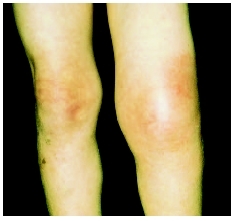
Larger allergic reactions often affect almost the entire arm, leg, foot, hand, or other area of the sting. Swelling occurs, and may last as long as seven to 10 days. The child may also experience a low-grade fever , fatigue, and nausea .
Some children experience a more severe allergic reaction. For a small percentage of these individuals, the stings may be life threatening. Severe allergic reactions can involve multiple body organs and may progress rapidly. This reaction is called anaphylaxis. Anaphylaxis is considered a medical emergency and may be fatal. The symptoms of anaphylaxis include the following:
- wheezing
- difficulty breathing
- itching and hives over large areas of the body
- swelling in the tongue or throat
- dizziness , chest pain, racing heartbeat, or fainting
- stomach cramps, nausea, or diarrhea
In severe cases, a rapid fall in blood pressure may result in shock and loss of consciousness. (This is less common in children than adults.) The progression of these symptoms may only take a few minutes.
When to call the doctor
For the majority of insect stings, home care is all that is necessary. However, in many cases medical attention is warranted. If any of the following are true, parents should seek professional assistance promptly.
- Symptoms progress beyond the site of the sting.
- Swelling becomes extensive and painful.
- The sting is located on the head or neck area.
- The child has had severe large reactions in the past.
- There is evidence of infection, such as increased pain, redness, warmth, and swelling at the sting site.
If a child develops hives, has difficulty breathing or swallowing, swelling of the lips or face, fainting, or dizziness, he or she should be transported to an emergency department immediately.
Diagnosis
An allergy to insect stings is determined by the doctor, who takes a thorough history from the patient and his or her parents. The history will usually show that the child has been stung previously. The doctor will also note the presence of the various symptoms common to insect sting allergic reactions. Skin testing may be performed by an allergist to determine the specific sensitivities the child may have.
Treatment
If a child has been stung by an insect that has left its stinger, it should be removed by flicking the fingers at it. Avoid squeezing the venom sac, as this can force more venom into the skin. If fire ants have stung the child, they should be carefully brushed off to prevent repeated stings.
Local treatment is normally all that is needed for small skin reactions. The affected arm or leg should be elevated and an ice pack applied to the area to reduce swelling and pain. Over-the-counter products can also be used to decrease the pain and itching. These include the following:
- products with a numbing effect, including topical anesthetics like benzocaine and phenol
- hydrocortisone products, which may decrease inflammation and swelling
- skin protectants, such as calamine lotion and zinc oxide, which have astringent, cooling, and antibacterial affects
- diphenhydramine, an antihistamine, which will help to control itching, and will counter some of the substances produced as part of the reaction
- ibuprofen or acetaminophen for pain relief
It is important to keep the area of the sting clean. The site should be gently cleansed with mild soap and water. Avoid breaking any blisters, as this can increase the chances of a secondary infection.
Any symptoms that progress beyond the local area of the sting require immediate attention. Allergic reactions to insect stings are considered medical emergencies. The physician will treat the child with epinephrine (adrenaline), which is usually given as an injection into the arm. An antihistamine such as diphenhydramine is usually given by mouth or injection to diminish the histamine reaction. Gluococorticoids, such as prednisone or methylprednisolone, are often given to decrease any swelling and to suppress the immune response. The physician
After a child has experienced a severe allergic reaction and received emergency treatment, the doctor may write a prescription for a self-injecting epinephrine device. This device should be carried by the parent or child at all times, especially when the child is out of reach of medical care, such as on an airplane or in the woods. However, sometimes epinephrine is not enough, and other treatment may be needed. Whenever children with a known severe insect sting allergy are stung, they should receive prompt medical attention, even if they have received an epinephrine injection.
Prognosis
Prompt treatment normally prevents immediate complications, but a delay in the treatment of a severe allergic reaction can result in rapid deterioration and even death. The long-term prognosis is usually good, with the rare exception of possible local infections. If a child develops anaphylaxis after an insect sting, that child is at an increased risk of developing anaphylaxis if stung again.
Prevention
Obviously the best way to avoid an allergic reaction from an insect sting is to avoid getting stung in the first place. One way to do this is to be able to identify stinging insects and where they live.
- Honeybees have a fuzzy, rounded body with dark brown coloring and yellow markings. After stinging, the honeybee normally leaves its barbed stinger in its victim, and then the bee dies. Honeybees are usually not aggressive and will only sting if provoked. However, the so-called "killer bees," or Africanized honeybees, are far more aggressive and may sting in swarms. Wild honeybees live in honeycombs or colonies in cavities of buildings or in hollow trees. Africanized honeybees may nest in old tires or holes in the ground, in house frames, or between fence posts.
- Yellow jackets are black with yellow markings. Their nests have a papier-mâché appearance and are usually located underground. However, they can also be found in woodpiles, in the walls of frame buildings, or in masonry cracks.
- Paper wasps have slender, elongated bodies and are black, red, or brown with yellow markings. Their nests are also made of a paper-like substance that opens downward, in a circular comb of cells. Their nests are often located behind shutters, in shrubs or woodpiles, or under eaves.
- Fire ants are reddish brown to black stinging insects. They build nests of dirt in the ground that may be quite tall. Fire ants attack with little warning.
A variety of precautionary measures will decrease the chances of a child getting stung.
- Avoid walking barefoot on lawns and wear closed-toe shoes. The majority of honeybee stings occur on the bottom of the foot when a child steps on the bee.
- Hire an exterminator to destroy nests and hives around the home.
- The smell of food attracts insects, so be careful when eating, drinking, or cooking outdoors. Keep food covered.
- Remain calm and quiet if flying insects are noted and move away slowly. Do not attempt to swat them.
- Avoid using highly scented perfumes, colognes, or hair sprays.
- Avoid wearing brightly colored clothing.
- Do not wear loose fitting garments that can trap insects between the material and skin.
- Keep the areas around trash containers clean and at some distance away from where children are playing.
Allergy shots
Allergy shots for insect stings, also known as venom immunotherapy, can be an effective treatment for children who experience a severe reaction to insect stings. Any child who has had a significant reaction to an insect sting should be evaluated by an allergy specialist. Not all children who have had a reaction will get allergy shots, but many should. It was once believed that most children would outgrow insect sting allergies and that allergy shots were not needed. However, as of 2004, it is known that about one in five will remain allergic into adulthood. Because of this pattern, it is recommended that immunotherapy should be used for the approximately 40 percent of children who experience moderate-to-severe systemic reactions to insect stings.
Venom immunotherapy is a highly effective vaccination program that actually prevents future sting reactions in most patients who receive them. The child is initially tested to determine their individual sensitivities. The treatment normally involves twice weekly injections of venom in dosages that are gradually increased over about 10 to 20 weeks. At this point, a maintenance dosage is administered about every one to two months. Allergy shots given in childhood can protect the child for 10 to 20 years.
Nutritional concerns
For children who have a known allergy to the venom of honeybees, parents need to use caution (and consult with a physician) before using any honeybee products.
KEY TERMS
Allergy shots —Injections given by an allergy specialist to desensitize an allergic person. Also known as immunotherapy treatment.
Anaphylaxis —Also called anaphylactic shock; a severe allergic reaction characterized by airway constriction, tissue swelling, and lowered blood pressure.
Parental concerns
Parents should be aware of the potential risks of insect stings and should teach their children to take measures to avoid being stung. If their child does get stung, parents need to begin treatment immediately and watch the child closely for any signs of allergic reaction. If these do occur, parents should transport their child immediately to a hospital emergency department.
Resources
BOOKS
Connolly, H. 10 Things to Know about Bees and Other Stinging Insects: Bee Aware and Bee Safe. Beaufort, NC: 2Lakes Publishing, 2002.
Welch, Michael J. American Academy of Pediatrics Guide to Your Child's Allergies and Asthma: Breathing Easy and Bringing Up Healthy, Active Children. Westminster, MD: Villard Books, 2000.
PERIODICALS
Jones, Stacie M. "Insect Sting Allergy with Negative Venom Skin Test Responses." Pediatrics 110 (August 2002): 437–39.
ORGANIZATIONS
American Academy of Allergy, Asthma, and Immunology. 555 East Wells Street, Suite 1100, Milwaukee, WI 53202–3823. Web site: http://www.aaaai.org.
American College of Allergy, Asthma, and Immunology. 85 West Algonquin Road, Suite 550, Arlington Heights, IL 60005. Web site: http://allergy.mcg.edu/home.html.
WEB SITES
Janson, Paul A., and Mary Buechler. "Insect Sting, Allergy." eMedicine , April 21, 2001. Available online at http://www.emedicine.com/aaem/topic269.htm (accessed October 19, 2004).
Deanna M. Swartout-Corbeil, RN
Comment about this article, ask questions, or add new information about this topic: