Atopic dermatitis
Definition
Atopic dermatitis (AD) is a chronic skin disorder associated with biochemical abnormalities in the patient's body tissues and immune system. It is characterized by inflammation, itching , weepy skin lesions, and an individual or family history of asthma , hay fever, food allergies , or similar allergic disorders. Atopic dermatitis is also known as infantile eczema or atopic eczema. The word atopic comes from atopy , which is derived from a Greek word that means "out of place." Atopy is a genetic predisposition to type I (immediate) hypersensitivity reactions to various environmental triggers. It includes bronchial asthma and food allergies as well as atopic dermatitis.
Description
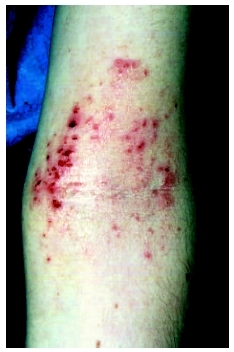
AD varies in severity but in general is characterized by red, weeping, crusted patches of inflamed skin that itch constantly. The distribution of the skin lesions depends on the child's age. In infants, the skin lesions are usually found on the face, scalp, diaper area, body folds, hands, and feet, and tend to be exudative (oozing fluid that has escaped from blood vessels as a result of inflammation). Infants old enough to crawl may have patches of inflamed skin on the neck and trunk as well. In older children, the affected areas are usually located on the wrists, ankles, back of the neck, insides of the elbows, and the backs of the knees. The skin lesions in older children are more likely to be lichenified than exudative. Lichenification is the medical term for a leather- or bark-like thickening of the outermost layer of skin cells (the epidermis) as a result of long-term scratching or rubbing of itching lesions. In addition, the normal markings of the skin are exaggerated in lichenification.
The lesions of AD are accompanied by intense pruritus, which is the medical term for itching. Children with atopic dermatitis often have a lowered threshold of sensitivity to itching, which means that they feel itching sensations more intensely than children without the disorder. The pruritus often creates a vicious cycle of itching and scratching, which leads to more widespread rash, which leads to more itching. The child may scratch the affected skin only intermittently during the day, however. It is common for children with AD to do more scratching in the early evening and at night; moreover, disruptions of normal sleep patterns are common in these children.
Transmission
Atopic dermatitis is not contagious but may affect several members of the same family at the same time.
Demographics
Atopic dermatitis is a very common condition in the general population. According to the National Institute of Arthritis and Musculoskeletal and Skin Diseases (NIAMS), about 15 million people in the United States have one or more symptoms of the disease. It accounts for 15 to 20 percent of all visits to dermatologists (doctors who specialize in treating diseases of the skin). About 20 percent of infants develop symptoms of atopic dermatitis. Moreover, the proportion of people affected by AD is increasing; the American Academy of Allergy, Asthma, and Immunology (AAAAI) began a long-term study in 1999 that indicates that a larger percentage of children are affected by AD than was the case in the 1980s. This rise in prevalence is true of all developed countries, not just the United States and Canada. People who immigrate to Europe or North America from under-developed countries have increased rates of atopic dermatitis, which suggests that environmental factors play a role in the development or triggering of the disorder.
Atopic dermatitis begins early in life; about 65 percent of patients with AD develop symptoms during the first 12 months of life, with 90 percent showing symptoms before five years of age. The most common age for the onset of symptoms in infants is between six and 12 weeks of age. It is unusual for adults over the age of 30 to develop AD for the first time.
There is some disagreement among researchers with regard to race or ethnicity as risk factors for atopic dermatitis. Some studies indicate that all races and ethnic groups are equally at risk, while others suggest that Asians and Caucasians have slightly higher rates of AD than African Americans or Native Americans. Some skin lesions typical of AD may be more difficult to evaluate in African Americans because of the underlying skin pigmentation. With regard to sex, males and females appear to be equally at risk.
Atopic dermatitis is a major economic burden on families with children affected by the disorder. One researcher in Australia stated that the stresses on families with children diagnosed with moderate or severe AD are greater than the burdens on families with children with type 1 diabetes. These stresses include loss of sleep, loss of employment for the parents, time taken for direct care of the skin disorder, and the financial costs of treatment. The National Institutes of Health (NIH) estimates that atopic dermatitis costs U.S. health insurance companies more than $1 billion every year.
Causes and symptoms
Causes
The causes of atopic dermatitis were not completely understood as of 2004 but are thought to be a combination of genetic susceptibility, damaged skin barrier function, and abnormal responses of the child's immune system to environmental triggers. With regard to genetic factors, the disorder has been tentatively linked to loci on chromosomes 11 and 13. A child with one parent with AD has a 60 percent chance of developing the disorder; if both parents are affected, the risk rises to 80 percent. Nearly 40 percent of newly diagnosed children have at least one first-degree relative with atopic dermatitis.
In addition to genetic susceptibility, AD is the end result of a complex inflammatory process involving abnormalities in the child's skin and immune system. Some researchers have noted that the skin of people with AD contains lower levels of fatty acids, which may cause the skin to lose moisture more readily and become more sensitive to chemicals and other irritants. Others point to decreased production of a hormone in the immune system called interferon-gamma that ordinarily helps to regulate the body's response to allergens. People with AD may be hypersensitive to irritants because they have abnormally low levels of interferon-gamma in their systems.
About 80 to 90 percent of children with AD also have unusually high levels of an antibody called IgE in their blood. Antibodies are specialized proteins produced by the immune system that seek out and destroy bacteria, viruses, and other invaders. The high levels of IgE in the blood of AD patients are produced by hyperactive T helper 2 cells reacting against antigens in the environment. Although the role of increased IgE production in the development of atopic dermatitis was not fully understood as of 2004, measuring the level of this antibody in a sample of blood serum may be done to help distinguish AD from other skin diseases with similar symptoms.
Symptoms
The basic symptoms of AD have already been described. Dermatologists classify the lesions of AD into three basic categories:
- Acute lesions: These include extremely itchy reddened papules (small solid eruptions resembling pimples) and vesicles (small blister-like elevations in the skin surface that contain tissue fluid) over erythematous (reddened) skin. Acute lesions produce a watery exudate and are often accompanied by exfoliation (scaling or peeling of layers of skin) and erosion (destruction of the skin surface).
- Subacute lesions: These are characterized by reddening, peeling, and scaling but are less severe than acute lesions and do not produce an exudate.
- Chronic lesions: These are characterized by thickened plaques of skin, lichenification, and fibrous papules.
It is possible for a child or adolescent with chronic atopic dermatitis to have all three types of lesions at the same time.
Associated symptoms and disorders
Children and adolescents with AD frequently develop one or more of the following disorders or problems:
- Asthma: About 50 percent of children diagnosed with AD eventually develop asthma.
- Allergic rhinitis : Between 70 and 75 percent of children with AD eventually develop a nasal allergy. Allergic rhinitis , which is sometimes called atopic rhinitis, may be either seasonal (hay fever or rose fever) or nonseasonal (caused by dust, mold spores, pet dander, cigarette smoke, and other household allergens).
- Eye complications: These include such disorders as conjunctivitis (inflammation of the tissue that lines the eyelid), keratoconus (a cone-shaped distortion of the cornea of the eye), and cataracts. Although cataracts are usually associated with older adults, between 4 and 12 percent of children with AD develop rapidly maturing cataracts that may begin to interfere with vision as early as age 20. About 1 percent develop keratoconus.
- Ichthyosis, xerosis (dry skin), lichenification, and other skin abnormalities not caused by infections: Children with AD are likely to develop other skin problems.
- Secondary skin infections: Children and adolescents with AD frequently develop infections from bacteria that live on the skin and multiply when the child's scratching causes breaks or open sores in the skin. Most of these secondary infections are caused by Staphylococcus aureus and Streptococcus pyogenes .
- Psychosocial problems: Children with atopic dermatitis may withdraw socially if the lesions are extensive or otherwise noticeable. In addition, children with severe cases may have frequent absences from school. Adolescents may suffer depression or anxiety related to concerns about their appearance or the need to avoid participating in sports in order to minimize sweating.
When to call the doctor
Atopic dermatitis is rarely a medical emergency and can often be treated by the child's pediatrician. Parents should, however, consider consulting a dermatologist, allergist, or immunologist under any of the following circumstances:
- The child's AD has been diagnosed as severe. This classification means that 20 percent of the body's skin surface has been affected or 10 percent of the skin area in addition to involvement of the eyes, hands, and body folds.
- There is extensive exfoliation (peeling and scaling) of the skin.
- The child has eye complications.
- The child has recurrent secondary bacterial infections.
- The child is frequently absent from school, has developed psychosocial complications, or has impaired quality of life. In many cases the entire family's quality of life is affected by the stresses and frustrations of coping with the disease, and other family members' reactions may in turn upset the child with AD.
- The child has had to be hospitalized for treatment of the AD.
- The child has had to take more than one course of oral steroid drugs.
- The diagnosis is uncertain.
Diagnosis
History and physical examination
Diagnosis of atopic dermatitis begins with a history-taking and physical examination by the child's doctor. In the case of infants or very young children, the doctor will ask the parents for information about a family history of atopic disorders as well as information about the onset of the symptoms. The doctor will then examine the child's skin and assess the following factors:
- physical appearance of the lesions and their distribution on the child's body
- timing, which includes seasonal variations in the severity of the rash as well as its chronic or recurrent nature
- environmental factors, which includes foods as well as such common triggers of AD as dust, pet dander, household cleaning agents, plastics, nail polish remover, and other cosmetics or chemicals
- presence of such other conditions associated with AD as eye complications or bacterial infections of the skin
The doctor will ask older children and adolescents directly whether their skin lesions are affected by such factors as pets in the household; smoking ; using perfumes, shampoos, deodorants, or other personal care products; taking certain prescription medications; wearing wool or other rough-textured fabrics; using laundry detergents or fabric softeners; being exposed to extremes of temperature or humidity; athletic activity; emotional stress; and (in females past puberty ) hormonal changes related to menstruation .
There are no laboratory tests that can confirm the diagnosis of AD; in some cases, the doctor may need to examine the child more than once in order to distinguish between atopic and seborrheic dermatitis . In most cases, the doctor will make the diagnosis on the basis of criteria established by the AAAAI in the 1990s. To be considered atopic dermatitis, the child's symptoms must at total at least three major and three minor symptom criteria.
There are four major criteria for AD:
- pruritus
- typical form and distribution of skin lesions
- chronic or recurrent dermatitis
- a personal or family history of atopic disorders
There are about two dozen minor criteria for atopic dermatitis. The most common minor characteristics are early age of onset, food intolerance, wool intolerance, susceptibility to skin infections, immediate type I response to skin test, elevated total serum IgE, eczema of the nipples, xerosis or dry skin, dermatitis of the hands and feet, recurrent conjunctivitis, sensitivity to emotional stress, and ichthyosis.
Family practitioners often refer patients with AD to an allergist for consultation, particularly if the child has developed asthma or has acute reactions to foods.
Laboratory tests
In addition to a general physical examination, the doctor may order a blood test to look for the presence of elevated IgE levels in the blood serum. The doctor may also test tissue fluid or smears from the child's lesions to rule out skin parasites or infections that mimic atopic dermatitis, such as bacterial infections, scabies , or herpesvirus infections.
The doctor may recommend skin prick testing to determine whether certain specific substances or foods trigger the child's AD. These tests are usually given only to children with moderate or severe cases of atopic dermatitis. The child must discontinue taking oral antihistamine medications for one week before the tests and discontinue using topical steroid creams for two weeks. The test is performed by pricking the surface of the skin with a thin needle containing a small amount of a suspected allergen.
Treatment
The AAAAI recommends a four-part approach to the treatment of atopic dermatitis. Children with AD should take the following steps:
- Avoid foods or other factors that trigger symptoms, avoid such irritating fabrics as wool and synthetic fibers, wear 100 percent cotton underwear, trim fingernails short to minimize damage to the skin from scratching, keep the skin moist with proper use of emollient creams or oils after bathing, avoid the use of fabric softeners or scented detergents when laundering clothes and rinse clothes completely, and try to reduce emotional stress.
- Use appropriate medications as prescribed. The types of medications used vary depending on the severity of the child's symptoms and the presence of other infections. Most children are given both oral and topical (applied to the skin) medications. Topical medications include corticosteroid creams (Aristocort, Kenalog, Halog, Topicort, and many other brand names) and ointments containing immunomodulators, usually tacrolimus (Protopic) or pimecrolimus (Elidel). Corticosteroid creams are used to suppress inflammation, while the immunomodulator creams work by reducing the reactivity of the child's immune system. Although the corticosteroid creams have been used in both prescription-strength and over-the-counter (OTC) formulations for many years to treat AD, they may cause such side effects as thinning of the skin or stretch marks when used for long periods. They may also make skin infections worse. For these reasons, doctors recommend using the least powerful corticosteroid creams that control the symptoms. With regard to oral medications, antihistamines are often prescribed to stop itching at night so that the child can sleep. Oral or injected corticosteroids are sometimes used for short-term treatment of severe cases of AD that have not responded to topical medications; however, these drugs often have severe side effects, including stunted growth, thinning or weakening of the bones, high blood sugar levels, infections, and an increased risk of cataracts. Children with skin infections are usually given oral rather than topical antibiotics , most commonly penicillin or a cephalosporin.
- Regarding asthma or allergic rhinitis, the child should be evaluated for immunotherapy.
- The child's family and friends need to be educated about the condition, and the child needs to maintain a schedule of regular follow-ups. In addition to followup visits with the pediatrician and allergist, the child should have regular eye examinations as a safeguard against cataracts or other eye complications.
Other treatments that are sometimes used for atopic dermatitis are tar preparations and ultraviolet light therapy (phototherapy). Tar preparations are messy but were still as of 2004 considered useful for treating patients with chronic lichenified areas of skin. Phototherapy with ultraviolet A or B light waves, or a combination of both, may be used to treat older children or adolescents with mild or moderate atopic dermatitis; it is not suitable for infants or younger children. Some patients who do not respond to ultraviolet light alone benefit from a combination of phototherapy and an oral medication known as psoralen, which makes the skin more sensitive to the light. Phototherapy has two potential side effects from long-term use: premature aging of the skin and an increased risk of skin cancer .
Children or adolescents with AD must use extra care when bathing or showering. The doctor may recommend a non-soap skin cleanser, as standard bath soaps tend to dry and irritate the skin. If soaps are used, they should never be applied directly to broken or eroded areas of skin. The water should be lukewarm rather than hot, and the skin should be allowed to air-dry or be gently patted with a towel; brisk rubbing or the use of bath brushes must be avoided. After the skin has dried, the patient should apply a skin lubricant to seal moisture in the skin and create a barrier against further dryness or irritation.
Children with AD should also avoid unnecessary exposure to extremely hot, cold, moist, or dry outdoor environments. They should take care to avoid getting sunburned and should avoid participating in sports that involve physical contact or cause heavy perspiration.
Alternative treatment
There are a number of different complementary and alternative (CAM) approaches that have been used to treat atopic dermatitis, in part because the disorder is so widespread among children. In fact, infantile eczema is one of the most common conditions for which parents seek help from alternative practitioners. Most alternative therapies for atopic dermatitis fall into one of the following groups.
NATUROPATHY Naturopathy is a commonly used form of alternative treatment for AD; in one British study it was found effective for 19 out of 46 children in the subject group. Naturopaths favor food elimination diets as a way of managing AD, as well as lowering the child's overall intake of animal products. They recommend adding fish oil, flaxseed oil, or evening primrose oil to the child's diet to improve the condition of the skin, as many naturopaths believe that deficient intake of essential fatty acids is a major cause of AD. With regard to botanical products, a naturopath may suggest herbal preparations taken by mouth as well as topical creams made from herbs. Oral preparations may include extracts of hawthorn berry, blackthorn, or licorice root, while topical preparations to relieve itching typically include licorice or German chamomile. One German study found that a cream made with an extract of St. John's wort relieved the symptoms of AD better than a placebo, but the herbal preparation had not as of 2004 been compared to a standard corticosteroid cream.
HOMEOPATHY Homeopathy is the single most common CAM approach to atopic dermatitis in Europe, although it is frequently used in the United States as well. One German study followed a group of 2800 adults and 1130 children diagnosed with AD who were treated by homeopathic practitioners. The researchers found that over 600 different homeopathic remedies were recommended for the patients, although Sepia , Lycopodium, Sulphur , and Natrum muriaticum were the remedies most frequently prescribed. Most homeopathic practitioners in the United States as well as Europe consider AD a chronic condition that should be treated by constitutional homeopathic prescribing rather than by what is known as acute prescribing. In constitutional prescribing, the remedy is selected for long-term treatment of the patient's underlying susceptibility or constitutional weakness rather than short-term relief of present symptoms.
TRADITIONAL SYSTEMS OF MEDICINE According to Kenneth Pelletier, the former director of the alternative medicine program at Stanford University School of Medicine, both traditional Chinese remedies and Ayurvedic medicines benefit some people with atopic dermatitis. The British study of the use of CAM treatments in children with AD found that parents of Indian or Afro-Caribbean background were more likely to use these traditional approaches than Caucasian parents.
MIND/BODY APPROACHES Because flare-ups of AD are often related to increased emotional stress, some researchers have hypothesized that alternative approaches to lowering stress might help in treating the disorder. There is disagreement, however, about the effectiveness of such treatments as hypnosis or autogenic training. While some studies have reported that self-hypnosis, biofeedback, or autogenic training helped children with AD to manage their skin lesions with lower levels of steroid medications, other studies have reported that there is no conclusive evidence of the effectiveness of mind/body approaches in treating atopic dermatitis.
Nutritional concerns
Children and adolescents should avoid foods that trigger their AD. The most common offenders in flareups are peanuts and peanut butter, eggs and milk, seafood, soy, and chocolate. Long-term food elimination diets as a strategy for controlling AD are discussed below.
Children with moderate or severe AD often develop eroded areas or open cracks in the skin around the mouth from licking their lips or from allergic reactions to specific foods. They should apply a thin layer of petroleum jelly around the mouth before a meal to avoid irritation from citrus fruits, tomatoes, and other highly acidic foods.
Prognosis
As of the early 2000s, there is no cure for atopic dermatitis. People diagnosed with AD have highly individual combinations of symptoms that may vary greatly in severity over time. A significant percentage of children diagnosed with the condition, however, remain atopic into adulthood; one source states that 20 to 40 percent of children with infantile eczema continue to be affected, while NIAMS gives a figure of 60 percent. Some children included in these figures, however, outgrow the more severe forms of atopic dermatitis and suffer flare-ups in adult life only when they are exposed to high stress levels, chemical irritants, or other triggers in the environment. Other children may have only mild symptoms of AD until adolescence , when changes in hormone levels may cause a sudden worsening of symptoms.
Prevention
While atopic dermatitis in children cannot be completely prevented, NIAMS offers the following tips to parents as they try to help control the severity and frequency of flare-ups:
- Keep the child from scratching or rubbing the affected areas whenever possible.
- Avoid dressing the child in rough or scratchy fabrics and protect his or her skin from high levels of moisture.
- Keep the house at a cool, stable temperature with a consistent humidity level, using a humidifier during the heating season in colder climates.
- Quit smoking and do not allow others to smoke inside the house.
- Limit the child's exposure to dust, pollen, and animal dander. Some doctors recommend installing special filters in the house to remove dust and pollen from the air, removing carpets from the floors, or encasing mattresses and pillows with special covers to control dust mites.
- Recognize when the child is under stress and lower the stress level in the household if possible.
KEY TERMS
Allergen —A foreign substance that provokes an immune reaction or allergic response in some sensitive people but not in most others.
Atopy —A state that makes persons more likely to develop allergic reactions of any type, including the inflammation and airway narrowing typical of asthma.
Autogenic training —A form of self-hypnosis developed in Germany that appears to be beneficial to migraine sufferers.
Conjunctivitis —Inflammation of the conjunctiva, the mucous membrane covering the white part of the eye (sclera) and lining the inside of the eyelids also called pinkeye.
Dander —Loose scales shed from the fur or feathers of household pets and other animals. Dander can cause allergic reactions in susceptible people.
Dermatologist —A physician that specializes in diseases and disorders of the skin.
Eczema —A superficial type of inflammation of the skin that may be very itchy and weeping in the early stages; later, the affected skin becomes crusted, scaly, and thick.
Erythema —A diffuse red and inflamed area of the skin.
Exfoliate —To shed skin. In skin care, the term exfoliate describes the process of removing dead skin cells.
Exudation —Leakage of cells, proteins, and fluids through the blood vessel wall into the surrounding tissue.
Ichthyosis —A group of congenital skin disorders of keratinization characterized by dryness and scaling of the skin.
Keratin —A tough, nonwater-soluble protein found in the nails, hair, and the outermost layer of skin. Human hair is made up largely of keratin.
Keratoconus —An eye condition in which the central part of the cornea bulges outward, interfering with normal vision. Usually both eyes are affected.
Lichenification —Thickening of the outer layer of skin cells caused by prolonged scratching or rubbing and resulting in a leathery or bark-like appearance of the skin.
Papule —A solid, raised bump on the skin.
Pruritus —The symptom of itching or an uncontrollable sensation leading to the urge to scratch.
Rhinitis —Inflammation and swelling of the mucous membranes that line the nasal passages.
Scabies —A contagious parasitic skin disease caused by a tiny mite and characterized by intense itching.
Vesicle —A bump on the skin filled with fluid.
Xerosis —The medical term for dry skin. Many children diagnosed with atopic dermatitis have a history of xerosis even as newborns.
Nutritional concerns
The doctor may suggest a food challenge in order to identify a food or foods that may be triggering the child's skin rash. In a food challenge, a particular food is eliminated from the child's diet for a few weeks and then reintroduced. In some cases, a child with AD may benefit from a longer-term diet that eliminates problem foods entirely. In these cases, however, the child's height and weight should be carefully monitored to make sure that the diet is nutritionally adequate, and the diet itself should be reevaluated every four to six months. The doctor may recommend vitamin supplements or a consultation with a dietitian.
Parental concerns
Parental concerns about atopic dermatitis extend to the possible long-term consequences of the disorder as well as the child's present discomfort and sleeping problems. Depending on the severity and location of the skin rash, the child may withdraw from social activities to avoid teasing or resent restrictions on athletic or other outdoor activities. In addition to such possible complications of AD as eye disorders and skin infections, parents must also be attentive to signs of long-term side effects caused by medications or other forms of treatment for the AD. To cope with the impact of AD on other family members, parents may find counseling and support groups helpful. Because atopic dermatitis is so widespread in the general population, many support groups have been formed, particularly in the larger cities.
See also Allergic rhinitis ; Allergies ; Asthma .
Resources
BOOKS
"Atopic Dermatitis." Section 10, Chapter 111 in The Merck Manual of Diagnosis and Therapy , edited by Mark H. Beers and Robert Berkow. Whitehouse Station, NJ: Merck Research Laboratories, 2002.
"Hypersensitivity Disorders." Section 12, Chapter 148 in The Merck Manual of Diagnosis and Therapy , edited by Mark H. Beers and Robert Berkow. Whitehouse Station, NJ: Merck Research Laboratories, 2002.
Pelletier, Kenneth R. "CAM Therapies for Specific Conditions: Eczema." In The Best Alternative Medicine , Part II. New York: Simon & Schuster, 2002.
PERIODICALS
Ernst, E., et al. "Complementary/Alternative Medicine in Dermatology: Evidence-Assessed Efficacy of Two Diseases and Two Treatments." American Journal of Clinical Dermatology 3 (2002): 341–48.
Johnston, G. A., et al. "The Use of Complementary Medicine in Children with Atopic Dermatitis in Secondary Care in Leicester." British Journal of Dermatology 149 (September 2003): 566–71.
Kemp, A. S. "Cost of Illness of Atopic Dermatitis in Children: A Societal Perspective." Pharmacoeconomics 21 (2003): 105–13.
Leung, D. Y., et al. "New Insights into Atopic Dermatitis." Journal of Clinical Investigation 113 (March 2004): 651–57.
Ross, S. M. "An Integrative Approach to Eczema (Atopic Dermatitis)." Holistic Nursing Practice 17 (January-February 2003): 56–62.
Schempp, C. M., et al. "Topical Treatment of Atopic Dermatitis with St. John's Wort Cream: A Randomized, Placebo-Controlled, Double-Blind Half-Side Comparison." Phytomedicine 10 (2003), Supplement 4: 31–7.
ORGANIZATIONS
American Academy of Allergy, Asthma, and Immunology (AAAAI). 611 East Wells Street, Milwaukee, WI 53202. Web site: http://www.aaaai.org.
American Academy of Dermatology (AAD). PO Box 4014, Schaumburg, IL 60168–4014. Web site: http://www.aad.org.
National Institute of Arthritis and Musculoskeletal and Skin Diseases (NIAMS). 1 AMS Circle, Bethesda, MD 20892–3675. Web site: http://www.niams.nih.gov.
WEB SITES
Krafchik, Bernice R. "Atopic Dermatitis." eMedicine , January 23, 2002. Available online at http://www.emedicine.com/derm/topic38.htm (accessed November 22, 2004).
OTHER
"Handout on Health: Atopic Dermatitis". NIH Publication No. 03–4272. National Institute of Arthritis and Musculoskeletal and Skin Diseases (NIAMS). Bethesda, MD: NIAMS, 2003.
Rebecca Frey, PhD
Comment about this article, ask questions, or add new information about this topic: